
MODEL-01
Room Model
Architectural geometry is translated into an electro-acoustic model with relevant audience and surface zones.
PA Engineering / Acoustic Design
See coverage risks before they become site problems.
Acoustic modelling using EASE® software helps project teams evaluate proposed speaker placement, SPL coverage, room behaviour and speech intelligibility before procurement and installation.

SPL · DIRECT SOUND · REVERBERATION · STI / RASTI · COVERAGE
Modelling Workflow
Simulation can expose weak coverage, excessive variation, reverberant areas and the effect of changing speaker type, position, aiming or tapping—while those changes are still practical to make.
MODEL-01
Architectural geometry is translated into an electro-acoustic model with relevant audience and surface zones.
MODEL-02
Proposed speaker types, positions, orientation and coverage are tested against the space.
MODEL-03
Direct and total sound-pressure behaviour can be reviewed across the listener area.
MODEL-04
Room behaviour and reverberation assumptions are considered using the available project data.
MODEL-05
Speech-intelligibility indicators such as STI or RASTI can support design review where appropriate.
MODEL-06
Findings can be compiled to support consultant review and the design-submission process.
Illustrative Software Output
This is a calculated Direct SPL demonstration from an EASE® software sample project supplied in the source company profile. It explains the output format; it is not presented as a TWINS TECH project model or project result.
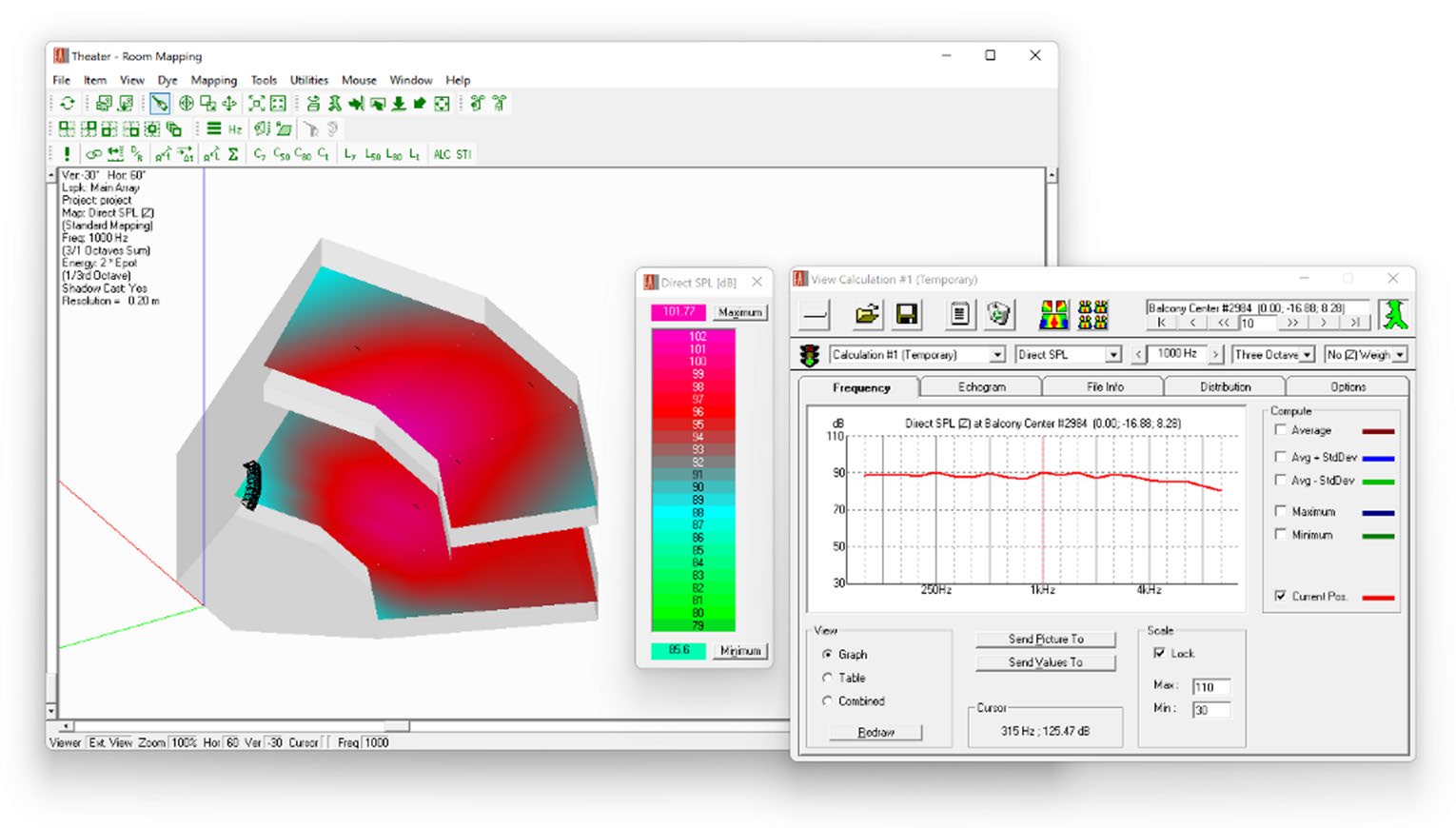 Calculated Direct SPL demonstration
EASE® is a registered trademark of AFMG Technologies GmbH.
Design Submission Support
A structured model and report can make assumptions visible, show the effect of speaker selection and orientation, and identify coverage risks early enough to change the design.
Send the plans, sections, proposed speaker data and project criteria. We will assess whether modelling is useful for the space and define the appropriate outputs.